
Ngorongoro Crater is one of Africa’s most extraordinary natural wonders and a highlight of northern Tanzania’s safari circuit. Formed millions of years ago when a massive volcano collapsed, it is the world’s largest intact volcanic caldera, spanning approximately 260 square kilometers. The crater floor forms a natural enclosure that supports an exceptional concentration of wildlife.
Often described as a “natural wildlife sanctuary,” the crater offers breathtaking scenery and remarkable biodiversity within a compact area. Its open grasslands, acacia forests, freshwater springs, and soda lake create diverse habitats that sustain thousands of animals year-round.
Ngorongoro Crater enjoys a generally mild climate due to its high elevation. Temperatures are cooler than many other Tanzanian parks, especially in the early mornings and evenings.
The dry season from June to October offers excellent wildlife viewing with clearer skies and easier road conditions. The wet seasons, from March to May and November, bring lush green landscapes and fewer visitors, though rain can occasionally affect accessibility.
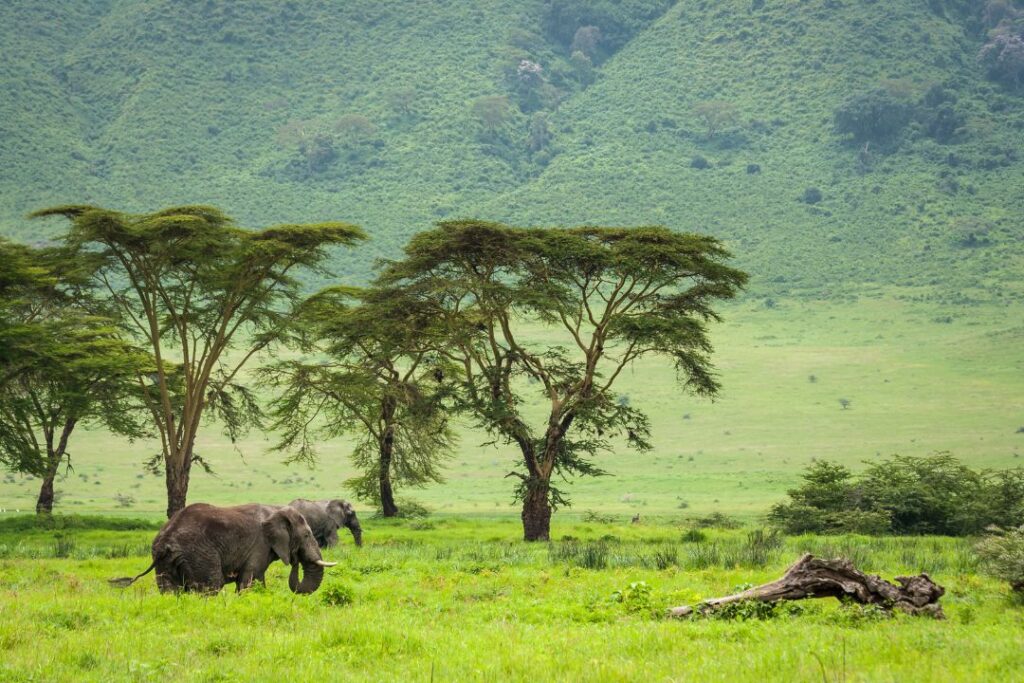
The crater is home to an extraordinary density of wildlife, including lions, elephants, buffaloes, leopards, and the critically endangered black rhino. Large herds of wildebeests and zebras graze across the plains, while hippos inhabit freshwater pools.
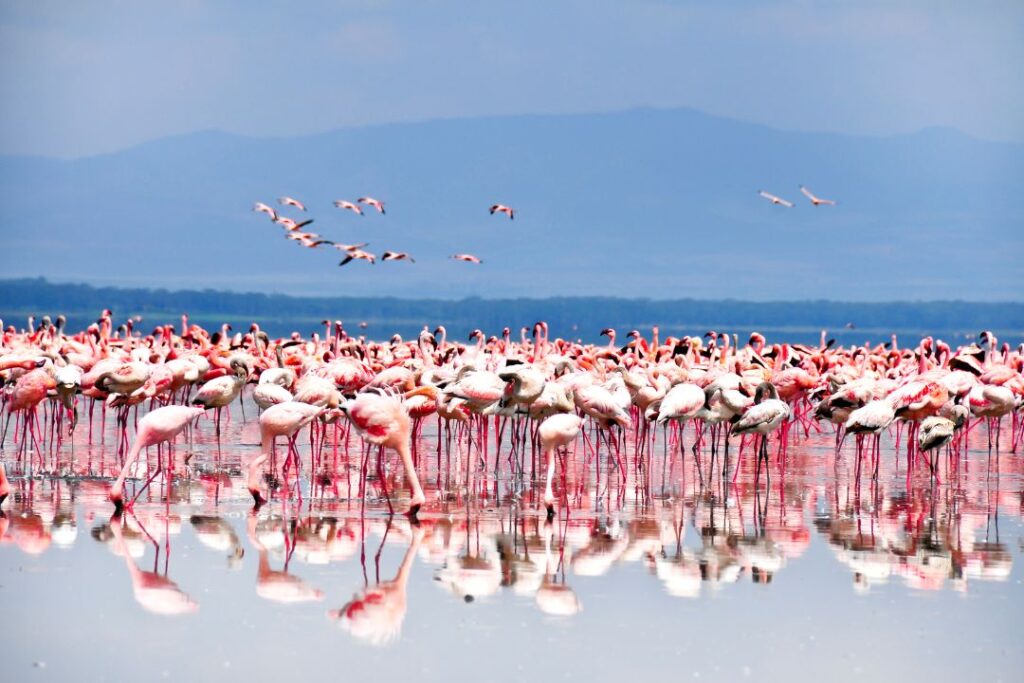
Birdlife is equally impressive, with flamingos often gathering at Lake Magadi on the crater floor. In total, the area supports hundreds of bird species, making it a rewarding destination for both wildlife enthusiasts and birdwatchers.
Ngorongoro Crater is situated in northern Tanzania within the Ngorongoro Conservation Area. It lies west of Arusha and near Serengeti National Park, forming part of the greater Serengeti ecosystem.
Its strategic location makes it a key stop along the northern safari route. The conservation area also includes highland plains, forests, and archaeological sites of global importance.
The crater measures about 19 kilometers in diameter and covers roughly 260 square kilometers. It is the largest intact and unfilled volcanic caldera in the world.
Its enclosed structure creates a natural habitat where wildlife remains within the crater year-round. This compact size allows visitors to experience diverse wildlife within a relatively small area.
Ngorongoro Crater is famous for its high concentration of wildlife and dramatic landscapes. It offers one of the best opportunities in Tanzania to see the Big Five within a single day.
The crater is also recognized as a UNESCO World Heritage Site due to its ecological significance and cultural heritage. Its unique geological formation adds to its global reputation.
Visitors can expect to see lions, elephants, buffaloes, hyenas, jackals, and large herds of grazing animals. The crater is one of the few places in Tanzania where black rhinos are regularly sighted.
Hippos, flamingos, and numerous bird species add to the diversity of wildlife. The abundance of prey also supports a strong predator population throughout the year.
Ngorongoro Crater is considered safe for visitors when park guidelines are followed. Wildlife viewing is conducted within designated areas under established safety regulations.
Travelers are advised to remain in vehicles unless in approved zones and to respect conservation rules. Responsible tourism ensures both visitor safety and ecosystem protection.
The crater can be visited year-round, but the dry season from June to October is particularly favorable for wildlife viewing. Animals are easier to spot due to shorter vegetation and stable weather conditions.
The wet season offers vibrant green scenery and fewer crowds. Although rain is more frequent, wildlife remains present in high numbers throughout the year.
The primary activity is game drives on the crater floor, offering close-range wildlife encounters. Scenic viewpoints along the crater rim provide spectacular panoramic views.
Visitors can also explore other parts of the Ngorongoro Conservation Area, including cultural visits to Maasai communities and archaeological sites such as Olduvai Gorge.
Ngorongoro Crater is accessible by road from Arusha, with a journey time of approximately 3–4 hours. The drive passes through scenic highlands and rural landscapes.
It is commonly combined with visits to nearby destinations such as Lake Manyara National Park and Tarangire National Park, creating a comprehensive northern Tanzania safari experience.